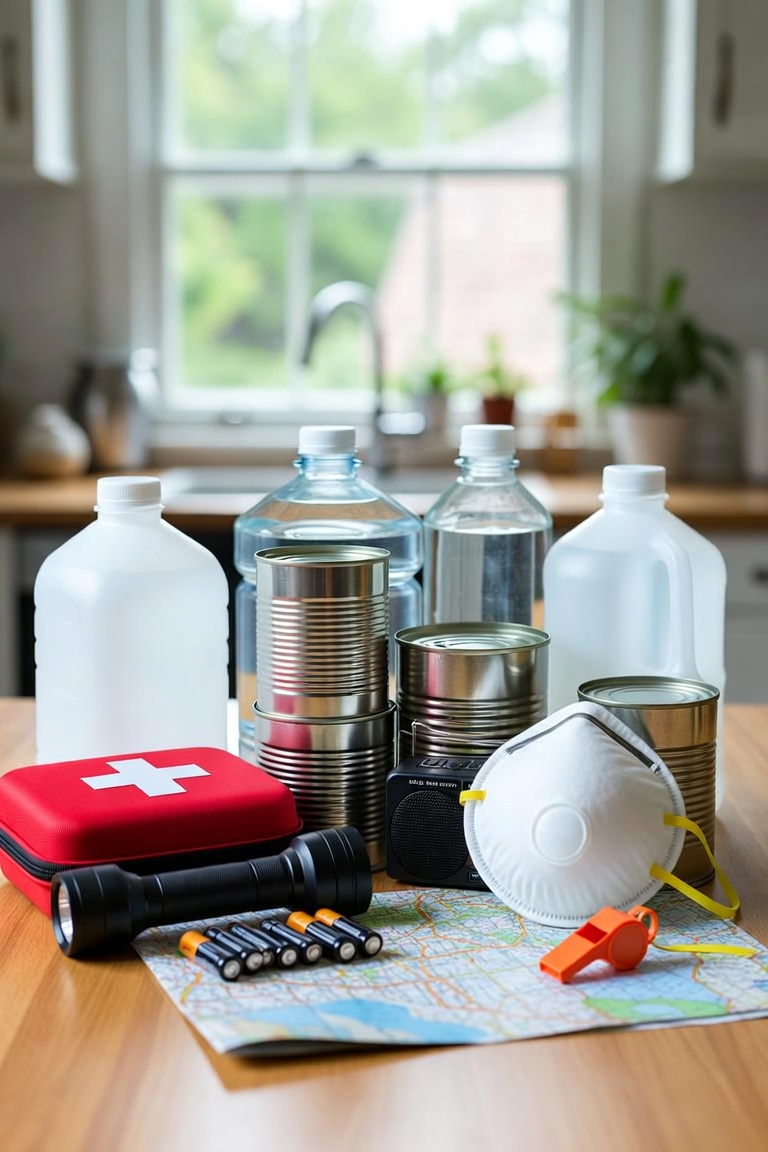
A basic home kit: water, food, first aid, light, radio and a map. AI illustration.Every emergency guide starts in the same place: enough supplies to look after yourself for several days without help. The federal Ready.gov list is short and worth following to the letter.
The basics
Water: one gallon per person per day for several days, for drinking and sanitation. Food: at least a several-day supply of non-perishable food, and a manual can opener. A battery-powered or hand-crank radio with NOAA Weather Radio. A flashlight and extra batteries. A first aid kit. A whistle to signal for help. A dust mask. Plastic sheeting, scissors and duct tape. Moist towelettes, garbage bags and plastic ties. A wrench or pliers to turn off utilities. Local maps. A cell phone with chargers and a backup battery.
Keeping it ready
Keep canned food in a cool, dry place, and boxed food in tightly closed plastic or metal containers. Replace expired items as needed, and rethink your needs every year as your household changes. Keep a kit at home, at work and in the car, because emergencies do not wait until you are home.
